
BLOG
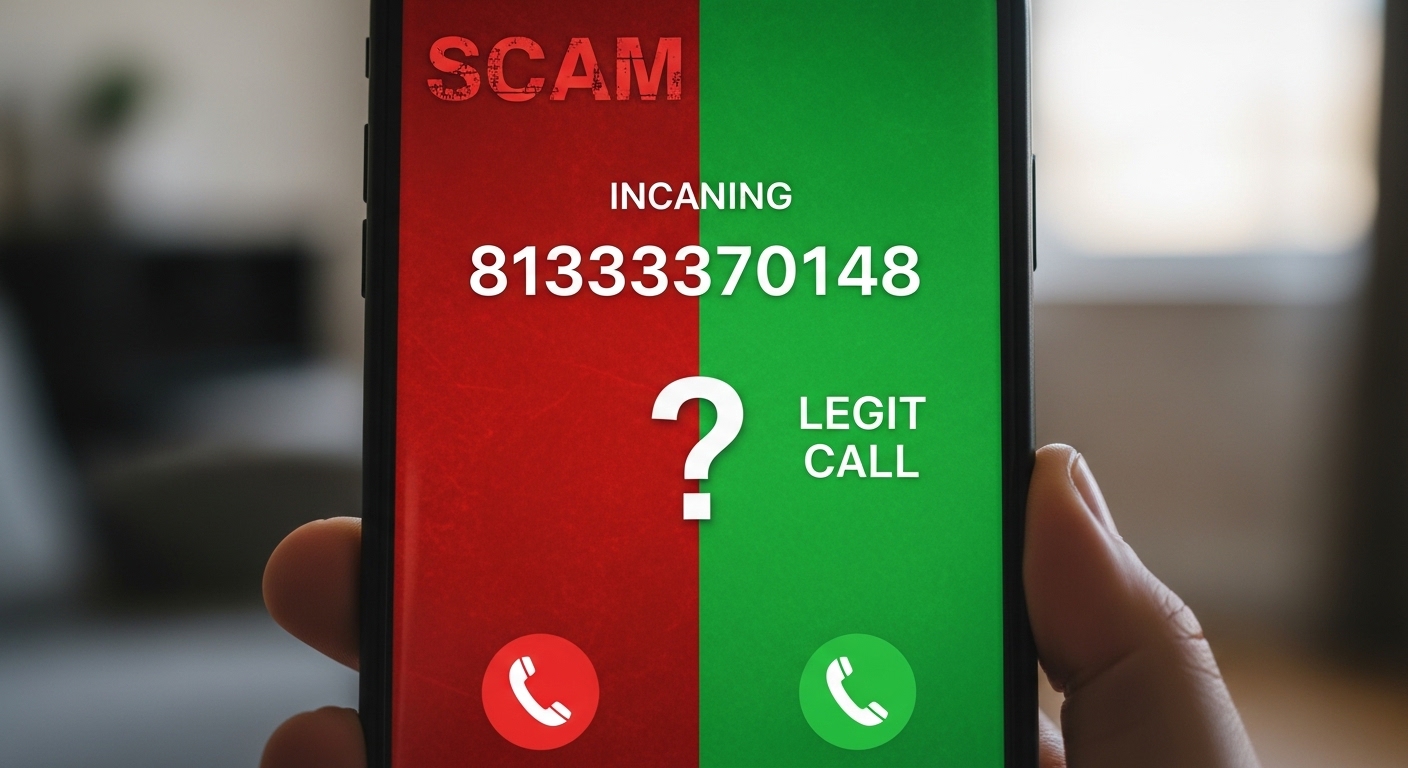
8133370148: Is This Number a Scam or Legit Call?

Overview
If you’ve spotted 8133370148 on your caller ID, you’re not alone. Unknown phone numbers can spark anxiety—Is it urgent? Is it a scam? Or is it a legitimate business trying to reach you? In this guide, I’ll walk you through everything I’d check to assess whether 8133370148 is trustworthy, how to handle similar calls safely, and what to do if you’ve already engaged.
What We Know About 8133370148
- Area code 813 is assigned to the Tampa, Florida region and surrounding areas.
- Scammers often spoof local area codes to increase pickup rates, so a familiar code isn’t proof of legitimacy.
- Reports about particular numbers can fluctuate; one week a number is quiet, the next it’s hitting dozens of people.
I can’t confirm the specific identity of this caller without fresh, verifiable reports, but you can use the steps below to figure out if the call was legitimate for your situation.
Quick Checklist: Scam or Legit?
Use this rapid test whenever 8133370148—or any unknown caller—rings your phone:
- Caller identity: Did the caller introduce themselves clearly (full name, company, department)?
- Purpose: Did they state a specific reason for calling you—not just a generic “about your account” line?
- Verification: Did they know verifiable details you have previously provided (last 4 digits, prior ticket number) without asking for sensitive info first?
- Pressure: Did they create urgency (“act now,” “limited time”) or threaten consequences (lawsuit, arrest, service cutoff)?
- Payment methods: Did they ask for gift cards, crypto, wire transfers, or payment via unusual apps?
- Callback path: Can you hang up and call the official published number of the organization to confirm?
If two or more red flags pop up, treat the call as suspicious and end it.
Common Scam Patterns Tied to Unknown Numbers
- “Account problem” bait: Claims your bank, Amazon, or phone carrier account is locked. They’ll ask for one-time codes or passwords.
- “Government” threats: Robocalls pretending to be the IRS, Social Security, or immigration officials demanding immediate payment.
- Delivery scams: Texts or calls saying there’s a package issue with a link to “reschedule.”
- Tech support traps: Pop-up or call alleging a virus on your device and urging remote access.
- Prize/lottery pitches: You “won,” but must pay taxes or fees first.
- Debt/utility shutoff: Threatening to disconnect power or service unless you pay now.
These tactics rely on urgency and fear. Legitimate organizations rarely demand instant action over the phone.
How to Investigate 8133370148 Safely
- Don’t engage on the first call.
- Let it go to voicemail; legitimate callers often leave a detailed message.
- If you answer, avoid confirming personal details—your full name, address, or account info.
- Cross-check the number.
- Search the number on reputable call-reporting sites to see recent feedback.
- Check the official website of the claimed organization for contact details. Call them back using that official number, not the caller’s number.
- Review the message content.
- Real businesses cite specific info (ticket numbers, appointment dates). Scammers stay vague.
- Watch for grammar errors, robotic voice patterns, and mismatched accents.
- Validate through alternate channels.
- For banks/utilities, log into your official app or portal to see if there’s a corresponding notice.
- For deliveries, enter your tracking number directly on the carrier site.
- Inspect timing and frequency.
- Multiple short calls in a row, hang-ups, or calls outside business hours increase suspicion.
What to Do If You Already Interacted
- Stop and assess: Write down what you shared (codes, login, SSN, payment info) and when.
- Change passwords and enable MFA: Prioritize email, banking, cloud storage, and your mobile carrier account.
- Contact your bank/issuer: If you paid or shared card details, ask for a chargeback and new card numbers.
- Secure your phone number: Add a port-out PIN with your carrier to prevent SIM swapping.
- Monitor accounts: Set transaction and login alerts. Review statements for the next 90 days.
- Report the incident: File a complaint with the FTC (U.S.), your state attorney general, or local consumer protection agency. If identity data was exposed, consider a fraud alert or credit freeze with the major bureaus.
Blocking and Filtering Tips
- Use your smartphone’s built-in tools to block 8133370148 and similar numbers.
- Enable Silence Unknown Callers (iPhone) or similar features on Android.
- Turn on carrier-level spam filtering (e.g., AT&T ActiveArmor, Verizon Call Filter, T-Mobile Scam Shield).
- Install a reputable third-party call screening app that uses community reports.
When a Call Might Be Legit
Not every unfamiliar number is trouble. Situations where a call from 8133370148 could be legitimate include:
- Healthcare: Appointment confirmations or pharmacy calls
- Deliveries: Couriers verifying an address or access code
- Local services: Repair technicians or property managers
- Schools/daycare: Urgent notifications or schedule changes
- Job-related calls: Recruiters or HR verifying interview times
Even then, it’s smart to verify via an official channel before sharing information.
Best Practices for Ongoing Protection
- Share less publicly: Limit what you post on social media that can be used for pretexting.
- Use unique passwords and a password manager: Avoid password reuse.
- Turn on MFA everywhere possible: Prefer app-based authenticators over SMS when you can.
- Keep devices updated: OS and app updates patch security flaws.
- Educate family members: Especially teens and seniors who are frequent targets.
Sample Script: How I Respond
- Unknown caller: “Hi, we’re calling about your account.”
- Me: “Thanks. I don’t handle account matters over inbound calls. I’ll reach the company through the number on their website.”
If they protest, I repeat once and hang up. Simple and effective.
The Bottom Line
8133370148 could be a legitimate local call—or a spoofed, unsolicited attempt to capture your information. Because the risk is asymmetrical (a brief delay rarely harms you, but a rushed decision can), default to caution: let it go to voicemail, verify independently, and protect your accounts first. If anything feels off, trust your instincts and disengage.
Overview
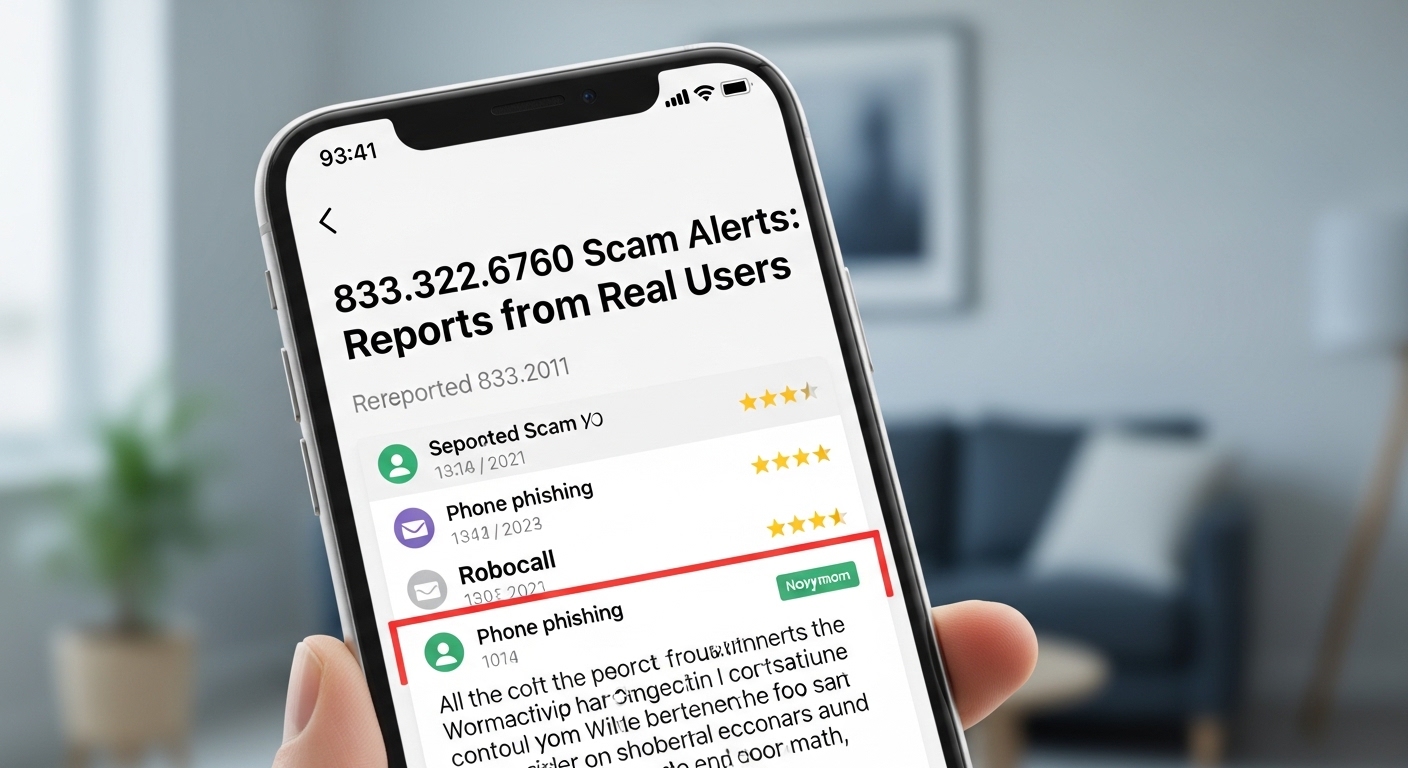
If you’ve been getting calls from 833.322.6760, you’re not alone. Many people report repeated calls, vague voicemail messages, and high-pressure scripts that try to extract personal or financial information. In this guide, I’ll break down the most common patterns associated with this number, how to recognize red flags quickly, and practical steps to protect yourself and report the behavior. I’ll also share a sensible response playbook you can follow when any unknown number rings—because the number may change, but the tactics often don’t.
What Is 833.322.6760?
Toll-free numbers using the 833 prefix are commonly used by legitimate businesses, nonprofits, and government hotlines. However, scammers also exploit toll-free ranges because they can cycle numbers easily and mask their identity. Reports around 833.322.6760 suggest behavior consistent with lead-generation robocalls and debt- or account-related phishing attempts. While a single number can be spoofed (faked caller ID), the patterns and scripts tend to be similar across many such campaigns.
Why This Number Appears Frequently
- Call centers can automate large call volumes and rotate through regional time zones
- Spoofing technology allows callers to reuse or imitate the same number across campaigns
- Public data breaches and data brokers fuel targeted lists that keep phones ringing
Common Call Patterns and Scripts
“Urgent Account Issue” or “Suspicious Activity”
Callers claim there’s a lock, hold, or unusual activity on your bank, credit card, or e-commerce account. They’ll push you to “verify” details—full name, date of birth, card digits, or one-time codes. Legitimate institutions rarely demand sensitive details via inbound calls and always support secure callbacks via official channels.
“Debt or Collection Notice”
You might hear that you owe a past-due balance, face legal action, or must settle immediately to avoid escalation. High-pressure tactics, threats, or refusal to provide written validation are hallmark signs of scams. If it’s a real collection effort, you have rights under the Fair Debt Collection Practices Act (FDCPA) in the U.S., including the right to request written verification.
“Warranty and Benefits Upsells”
These scripts push extended auto warranties, medical benefit cards, or home-protection plans. The offer sounds time-limited and urgent. If asked to pay upfront or to share banking info to “activate benefits,” hang up and research independently.
“Tech Support or Device Compromise”
Sometimes the caller says your computer or phone is infected and needs immediate remote access or a service fee. Real vendors don’t call out of the blue to fix your device; tech-support scams rely on fear and fast compliance.
Red Flags to Spot Instantly
- Requests for personal data: SSN, full DOB, full card numbers, or one-time passcodes
- Payment demands via gift cards, crypto, or wire transfer
- Refusal to identify the company or provide a verifiable callback number
- Caller ID mismatch with the claimed organization
- Threats (arrest, lawsuits, account closure) or extreme urgency
- Poor audio quality, background call-center chatter, or scripted responses
How to Respond Safely
Step 1: Don’t Engage With Sensitive Info
Never share personal or financial details with an unsolicited caller. If the claim sounds plausible, end the call politely and use an official number (from a bank card, website you typed directly, or your account app) to verify.
Step 2: Block and Filter
- Use your phone’s built-in block and spam-label features
- Enable carrier-level spam filtering (most major carriers offer this)
- Consider reputable third-party call-screening apps that crowdsource reports
Step 3: Document and Report
- Save the date/time, the number displayed, and any requested information
- File a report with the FTC (U.S.) or your country’s consumer protection agency
- If threats or impersonation of government agencies occur, report to appropriate authorities
- Inform your bank or credit card issuer if you shared any details by mistake
Step 4: Guard Your Accounts
- Change passwords and enable multi-factor authentication (MFA) on critical accounts
- Review recent transactions and set up real-time alerts
- Consider a credit freeze or fraud alert with major bureaus if sensitive info was exposed
Verification Tactics That Work
Call Back Using Official Channels
If the caller claims to represent your bank or a familiar service, hang up and dial a number you trust—printed on your card, statement, or the organization’s website (not a link sent by text or email). A legitimate agent can confirm whether contact was attempted.
Ask for Written Validation
For any debt-related call, request written validation via mail. Real collectors are legally required to provide this. Refusal or pushback signals a likely scam.
Control the Pace
Scammers rely on panic. Slow the conversation, insist on details, and take notes. If the caller becomes aggressive, that’s your cue to disconnect.
What If You Already Shared Information?
- Financial data (card, bank): Contact your bank immediately, lock or replace the card, and dispute any unauthorized charges
- Account credentials: Change passwords and revoke any active sessions; turn on MFA
- SSN or sensitive ID: Consider a credit freeze, monitor reports, and watch for new-account alerts
- Remote access granted: Disconnect the device from the internet, run reputable security scans, and consider a professional checkup
Why These Calls Persist
Economics of Robocalling
It’s cheap to dial thousands of numbers per minute. Even a tiny success rate can be profitable, which keeps bad actors in business.
Data Availability
Large-scale breaches and public data trades fuel targeted lists. Attackers can personalize scripts just enough to sound believable.
Enforcement Challenges
International operations, spoofing tactics, and fast-moving campaigns make enforcement difficult. Still, reporting helps investigators map patterns and shut down infrastructure.
Building a Personal Defense Plan
Harden Your Personal Info
- Use unique, strong passwords and a password manager
- Enable MFA wherever possible
- Limit the personal details you share publicly
Train Your Reflexes
- Let unknown calls go to voicemail
- Treat urgency as a red flag
- Verify through official channels, not the number that called you
Keep Family in the Loop
- Share these tactics with family members, especially teens and older adults
- Create a household “verification code” for money or help requests
- Encourage a callback rule: hang up and call back using verified numbers
Frequently Asked Questions
Is 833.322.6760 always a scam?
No single number is inherently always a scam, especially with spoofing in play. What matters are the behaviors. Use the verification steps and never rely solely on caller ID.
Can I stop these calls completely?
You can reduce them significantly with carrier filters, blocklists, and call-screening apps, but total elimination is unlikely. Consistent blocking and reporting help over time.
Should I call back the number?
It’s safer to avoid calling back unknown numbers. If the message claims to be from a known institution, call that institution directly using an official number you locate yourself.
The Bottom Line
Unwanted calls from numbers like 833.322.6760 thrive on pressure and confusion. By recognizing common scripts, slowing down the interaction, and verifying through trusted channels, you flip the script. Protect your information, report suspicious activity, and keep your accounts locked down. A calm, methodical response is your best defense.

When I first see a compact string like 73deb40, my mind immediately maps it to the world of digital identifiers—hash fragments, truncated commit IDs, database keys, or URL-safe tokens. Even though the meaning of such a token is context-dependent, there are consistent patterns in how systems mint, store, and validate these identifiers. In this article, I’ll walk through what 73deb40 could represent, how similar identifiers are generated, where they show up, and how engineers handle them safely and efficiently.
What Kind of Identifier Is 73deb40?
At a glance, 73deb40 fits a few common categories:
- Hexadecimal digest prefix: A 7-character hex string often appears as the abbreviated prefix of a longer cryptographic hash (e.g., SHA-1 or SHA-256). Version control systems like Git display short commit IDs this way.
- Truncated opaque ID: Services sometimes shorten UUIDs or hash values for display or logging, keeping only a prefix that remains unique within a dataset.
- Database key: Some systems store integer or hex-coded primary keys and represent them in hex for readability, migration compatibility, or URL-friendliness.
- URL slug or cache key: Edge caches and CDNs use short hex tokens to distinguish content variants and cache entries.
Because 73deb40 is not self-describing, its semantics come from the system that emits or consumes it.
Where This Identifier Appears in Practice
Version Control and Build Systems
- Git abbreviated commits: Git derives short IDs by truncating the commit’s SHA-1 hash until the prefix is unique within the repository. A 7-character prefix like 73deb40 is typical for user interfaces and command outputs.
- Tagging and release artifacts: CI/CD pipelines name artifacts with short hash prefixes to tie binaries back to source. For example, app-android-73deb40.apk makes traceability straightforward.
- Incremental builds and cache keys: Build tools (Bazel, Buck, Gradle) often key caches by hashing inputs. Human-friendly logs may display only a digest prefix such as 73deb40 to keep lines short.
Databases and Storage Layers
- Primary keys and sharding: Hex identifiers may encode shard or timestamp bits. A key like 73deb40 could represent an integer ID converted to hex, or a prefix of a larger keyspace.
- Content-addressable storage: Systems store blobs by their hash; when referencing or logging, they display a short prefix (e.g., 73deb40) and rely on full hashes internally for collision resistance.
- Index lookups and partitions: Data platforms partition by hash ranges. Seeing 73deb40 might indicate a partition boundary or a lookup range tagged by that prefix.
Networking, Security, and Configuration
- TLS and certificates: Administrators frequently identify certificates by the first few hex bytes of a fingerprint. A console might show 73deb40… to help confirm the right cert is installed.
- API versioning and configuration snapshots: Infra-as-code tools (Terraform, Pulumi) and API gateways tag deployments or configs using digest prefixes for quick comparison in dashboards.
- Secrets management: While secrets themselves aren’t exposed, references to versions or metadata may use short hex tokens like 73deb40 so operators can audit rotations without revealing secret material.
How Identifiers Like 73deb40 Are Generated
Hash-Based Schemes
- Cryptographic hashes: SHA-256, SHA-1, BLAKE3, and others turn arbitrary input into fixed-length digests. A short prefix is displayed for convenience, but the full digest is stored for integrity.
- Truncation strategy: Systems choose a minimum prefix length that remains unique in their scope. In Git, the minimum length grows as the repository grows to avoid ambiguity.
- Namespacing: To avoid cross-domain collisions, some systems incorporate a namespace (e.g., a project ID) into the hash input, ensuring 73deb40 is meaningful only inside that namespace.
Random and Time-Derived IDs
- Random tokens: Secure random bytes encoded as hex can yield 7-character fragments that look like 73deb40, often used in non-guessable URLs for one-time actions.
- Time-ordered keys: Schemes like ULIDs and Snowflake IDs encode time in the high bits. Substrings or hex views can produce familiar short prefixes while preserving sort order.
Working Safely With Short Identifiers
Collision Risk and Uniqueness
- Scope limitations: A 7-hex-character space is 16^7 ≈ 268 million possibilities. That’s large for small datasets but not collision-proof at scale.
- Progressive disambiguation: Tools often accept short IDs but require more characters if ambiguity arises. Code should detect ambiguous prefixes and prompt for longer input.
- Logging practices: Store and transmit full identifiers in structured logs while showing short prefixes in human-readable messages.
Security Considerations
- Do not treat short prefixes as secrets: A value like 73deb40 is guessable; avoid using such tokens for authorization.
- Rate limiting and enumeration: If short IDs appear in URLs, guard endpoints with auth checks and rate limits to prevent brute-force discovery.
- Side-channel exposure: Scrub identifiers from public error pages when they could reveal system structure or relationships between resources.
Implementation Patterns and Examples
Git-Style Abbreviated Lookups
- Store the full digest (e.g., 20 or 32 bytes).
- Build a prefix index mapping each n-character prefix to either a single object or a set.
- On lookup, expand the prefix until it is unambiguous.
- On display, prefer a fixed short length (e.g., 7 or 8) for readability, but handle collisions by auto-extending.
Database Keys and Migrations
- If using integer IDs, consider hex rendering for consistency in logs and cross-language tooling.
- For distributed systems, prefer sortable, k-ordered IDs (ULID/Snowflake) and only display prefixes like 73deb40 when human convenience matters.
- Validate inputs by length and character class to prevent injection via malformed IDs.
Observability and DevEx
- Span and trace IDs: Tracing systems like OpenTelemetry use long hex IDs. Dashboards often shorten them to a few characters for tables and summaries.
- Cross-linking: UIs can accept a short ID like 73deb40 in a quick-search box, then redirect to the exact resource using the full key.
- Tooling ergonomics: CLI utilities should support copy-friendly short IDs, autocompletion, and tab-disambiguation to reduce typing errors.
Troubleshooting With 73deb40
Ambiguous Matches
- Symptom: A command matches multiple resources for 73deb40.
- Fix: Increase the prefix length (e.g., 73deb401 or 73deb40a) or search with additional context like a namespace or date.
Stale References
- Symptom: A short ID points to an object that was rewritten or pruned (common with force-pushed Git histories or GC’d artifacts).
- Fix: Use pinned tags, immutable digests, or artifact registries that retain objects by content hash.
Encoding Mismatches
- Symptom: Copy/paste or URL encoding changes the token.
- Fix: Enforce lowercase hex and validate against a regex like
^[0-9a-f]{7,}$.
Best Practices Checklist
- Use full-length, collision-resistant identifiers internally; expose short prefixes only for UX.
- Make prefix length adaptive to dataset size and detect ambiguity at runtime.
- Never rely on short IDs for security or access control; treat them as public.
- Offer search and autocomplete across IDs, names, and metadata to find objects quickly.
- Keep logs structured with full IDs; surface short forms for readability in UI.
The Bottom Line
An identifier like 73deb40 is small, friendly, and ubiquitous across digital systems—from Git commits to cache keys. Its value lies not in the exact characters but in the conventions around generation, scope, and safety. By pairing human-friendly prefixes with rigorous internal identifiers and good operational hygiene, I can keep systems both ergonomic and robust.

Introduction
In this guide, I walk you through amaangameworld from top to bottom—what it is, why players love it, and how to get the most out of its core features and gameplay loops. My goal is to give you practical, easy-to-digest insights so you can jump in confidently and enjoy a smooth start, whether you’re a newcomer or a returning player.
What Is amaangameworld?
Amaangameworld is a feature-rich gaming ecosystem designed for flexible play across devices. It blends accessible onboarding with depth for long-term engagement. At its heart are progression systems, social play, and a creator-friendly toolkit that lets you customize your experience without sacrificing performance.
Key Pillars
- Accessibility: Quick setup, responsive controls, and clear UI.
- Depth: Layered progression, varied roles, and advanced builds.
- Social: Co-op and competitive modes that reward coordination.
- Creativity: Tools for modding, mapping, and seasonal events.
Getting Started
Starting strong sets the tone for your entire journey. Here’s how I recommend you begin.
Account & Setup
- Create your profile, pick a starter archetype, and enable two-factor security.
- Optimize settings: lock in a stable frame rate, tune controls and sensitivity, calibrate audio cues.
- Link your platform accounts to sync progress and cloud saves.
First-Hour Priorities
- Complete the tutorial to unlock core mechanics and beginner rewards.
- Join a starter guild or friends list to access matchmaking bonuses.
- Claim daily tasks and milestone quests for early resources.
Core Features
Amaangameworld stands out because of its systems working together seamlessly. These are the features I consider essential.
Progression & Roles
- Roles: Tank, Support, Scout, and Specialist form the core lineup. Each role has unique skills and synergies.
- Skill Trees: Mix active abilities with passive nodes to craft your playstyle.
- Gear Tiers: Common to Mythic items shape your power curve and unlock build diversity.
World & Modes
- Open Zones: Explore hub cities, resource regions, and instanced challenge areas.
- PvE Adventures: Story chapters, raids, and dynamic events scale with party size.
- PvP Arenas: Ranked ladders, casual skirmishes, and seasonal tournaments.
Economy & Crafting
- Resources: Gather, trade, or win materials across biomes.
- Crafting: Blueprints plus rare drops unlock high-impact items.
- Market: Player-driven trading with price history and buy orders.
Social & Communication
- Voice and text chat with smart pings for quick tactics.
- Guild halls with shared banks, research trees, and event calendars.
- Cross-play squads that keep friends together regardless of device.
Gameplay Tips and Strategies
This is where I share the advice I wish I had on day one.
Role Mastery
- Tank: Lead pulls, manage aggro with taunts, and rotate mitigation cooldowns.
- Support: Track ally health, cleanse debuffs, and time burst buffs for boss phases.
- Scout: Scout ahead, mark hazards, and burst down priority targets.
- Specialist: Control zones, set traps, and enable combo chains with crowd control.
Combat Fundamentals
- Positioning: Keep sightlines, avoid stacking, and kite heavy hitters.
- Rotations: Practice a tight ability sequence to maintain uptime.
- Resources: Don’t overspend—use generators and cooldowns intelligently.
Team Coordination
- Assign roles for interrupts, stuns, and objectives before fights.
- Use short callouts or pings; confirm with “ready” checks.
Crafting & Economy
- Start with utility crafts (potions, tools) for consistent value.
- Flip mid-tier materials on market day when supply spikes.
- Bank rare blueprints; craft only when demand outpaces supply.
Exploring the World
The game world is built for discovery. I like to alternate between efficient farming routes and slower, curiosity-driven exploration.
Points of Interest
- Hub Cities: Vendors, guild services, and public contracts.
- Biomes: Forests, tundra, deserts, and ruins with unique resource nodes.
- Instanced Zones: High-reward dungeons with rotating modifiers.
Events & Seasons
- Weekly Rotations: Boss affixes and loot tables shift on a schedule.
- Seasonal Themes: Limited-time modes, cosmetics, and balance updates.
- Leaderboards: Track your progress and chase personal records.
Build Crafting
Half the fun is making a build that feels uniquely yours.
How to Build Efficiently
- Pick a role goal (solo clear, raid utility, PvP burst) before spending points.
- Anchor your build around 1–2 signature abilities and augment them with passives.
- Test in the training grounds; adjust based on time-to-kill and survivability.
Sample Build Paths
- Tank: High-stamina gear + damage reflection + taunt reset passives.
- Support: Cooldown reduction + area heals + burst-boost ultimate.
- Scout: Crit chance + movement speed + execute talent.
- Specialist: Trap synergy + slow fields + chain stun combo.
Monetization and Fair Play
Transparency matters. Amaangameworld emphasizes a fair, skill-first progression model.
What to Expect
- Cosmetic-First Store: Skins and emotes with no pay-to-win stats.
- Battle Pass: Free and premium tracks with challenges and cosmetics.
- Earnable Currency: Daily and seasonal activities reward in-game currency.
Player Protections
- Anti-cheat with real-time detection and appeals.
- Clear reporting tools and community guidelines.
Troubleshooting & Performance
When things feel off, I run through a quick checklist.
Quick Fixes
- Lower shadows and post-processing for a big FPS boost.
- Switch to borderless windowed for stability on older rigs.
- Verify files and update drivers after patches.
Network Stability
- Prefer wired or 5 GHz Wi‑Fi; enable in-game netgraph.
- Set a reasonable max ping for matchmaking.
Frequently Asked Questions
Is amaangameworld beginner-friendly?
Yes. The tutorial and early quests ease you into roles, combat, and crafting without overwhelming you.
Can I play solo?
Absolutely. Most content scales, and solo builds can clear story arcs and bounties efficiently.
Is there cross-play?
Yes, cross-play and cross-save are supported among major platforms.
Final Thoughts
Amaangameworld shines when you approach it with curiosity and purpose. Follow the starter path, lean on a focused build, and play with others when you can. As systems open up, you’ll find the rhythm that makes the game click. I’ll keep exploring and refining strategies—see you in the next event.
-
 TECH1 month ago
Olxking123.com: How is Revolutionizing the Online Bargain Industry
-
 BLOG1 month ago
Onulife: Your Ultimate Guide to a Healthier & Balanced Lifestyle
-

 BLOG1 month ago
Exploring Gooics: Features, Benefits, and How It Works Now
-

 HOME1 month ago
TopHillSport.com: A Growing Hub for Sports Enthusiasts
-

 TECH1 month ago
Deshoptec.com: The Ultimate Marketplace for Cutting-Edge Tech
-

 BLOG1 month ago
Why Runlia is the Next Big Thing in Online Communities
-

 BLOG1 month ago
ChromiumFX: Advanced Analytics and AI for Smart Systems
-

 BLOG1 month ago
Cintia Coció: The Ultimate Guide to Her Modern Culinary World